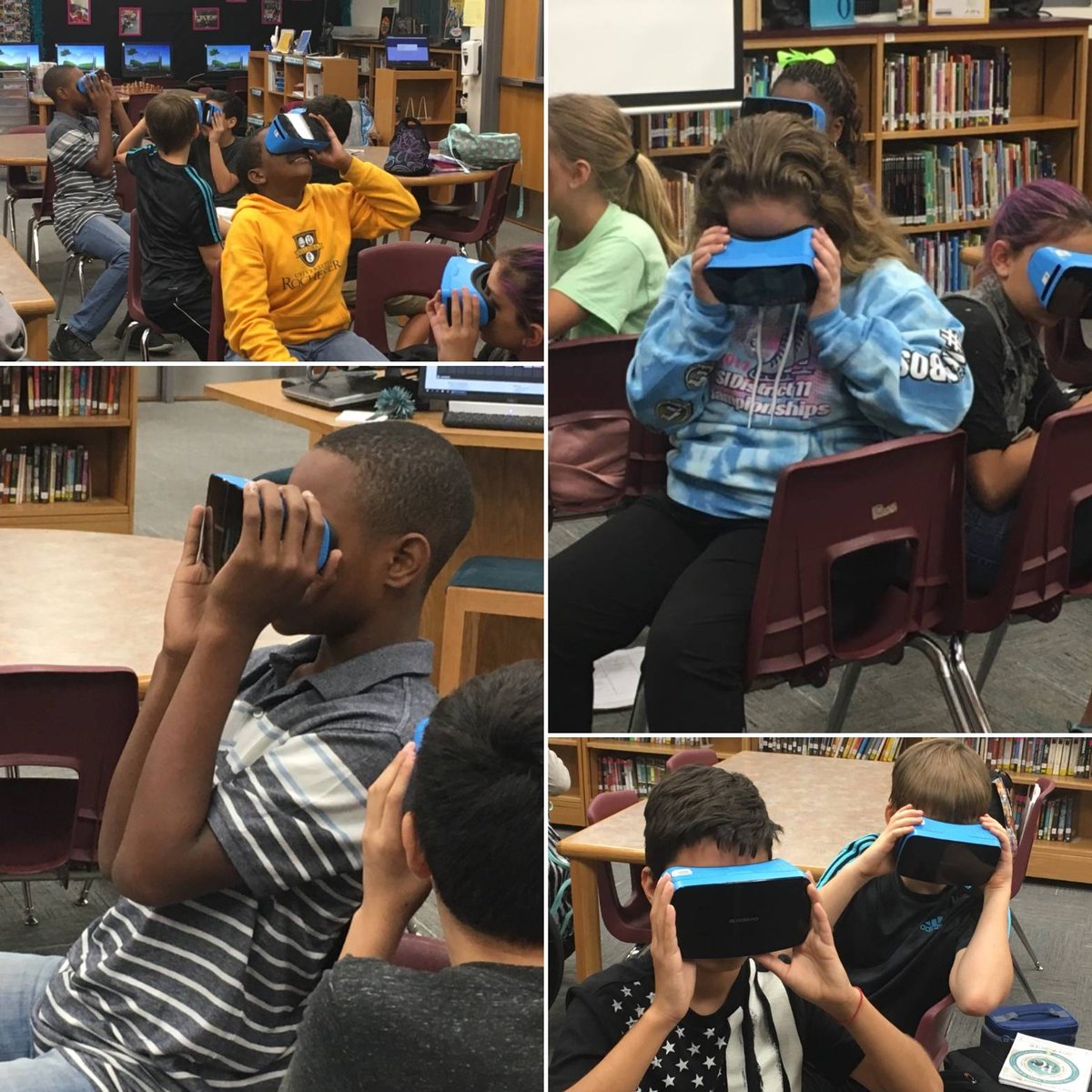
We had a great 2016-17 school year. The district rolled out almost 8,000 laptops and ipads to elementary and secondary campuses. Teachers embraced the opportunity to engage with students in new ways. To close the school year we asked teachers and administrators to share some of their successes in our TechKnowledgements campaign (see our list below). We know many more amazing integrations happened in classrooms and look forward to recognizing more teachers and campuses.
We are closing out the first nine-weeks of this new school year and want to encourage you to share what you see happening with technology integration and the talented students of Pflugerville ISD. Please submit TechKnowledgements using the online form. Together we have #NoLimits to the possibilities we create.
The Instructional Technology team now has a 2 small sets of 5 Google Expedition viewers and tablet! We would love to help you bring the world to right in to your classroom. Use this form to request dates for the viewers. The form also includes links to the reservation calendar and a list of currently available Google Expeditions.
Google now allows you to insert and play your Google Drive videos in your Google Slides. You no longer have to add them using YouTube.
When adding it from Drive, you can choose when to start and end the video and whether you want it to autoplay. You can even decide whether it should be muted or played with audio. Check out this G Suite Update.
Pflugerville schools will join in the global movement to get students coding. The Hour of Code events are part of Computer Science Education week, December 5-11. Students in more than 180 countries around the world will once again try coding for one hour. While the field of computer science continues to grow, the opportunity to try an hour of code helps students with other skills as well, including problem-solving, logic, and creativity. To help teachers plan for this event Hour of Code has a How-to Guide and a wide variety of activities. Teachers and students can go to https://hourofcode.com/us/learn to find an activity. The many activities provide opportunities for self-led tutorials or full lesson plans. You may be just starting out or looking to expand your coding knowledge. Teachers can even sort by subject area to find activities that reinforce curriculum (besides improving those problem-solving skills). You don't even need a computer to join in on the coding movement; options include the use of hand-held devices and unplugged activities (no technology required). Join millions of students and teachers and try an Hour of Code! Pflugerville ISD sign-up Need more help, contact Instructional Technology. A few of the many possibilities:
Pflugerville ISD will participate in the Hour of Code from December 5-9, 2016. Last year, 8,000+ PfISD students participated in the Hour of Code nationwide event. This year, the PfISD goal is 10,000 students. More students, more campuses and more participation challenge prizes are on the way. Event information will be delivered to Campus Digital Literacy Lead during the November meeting. Look for more details after November 15, 2016.
The 'Hour of Code™' is a nationwide initiative by Computer Science Education Week[csedweek.org] and Code.org[code.org] to introduce millions of students to one hour of computer science and computer programming.
Many teachers, myself included, have responded to a student's request "Can I go to the bathroom?" with "I'm not sure; can you?". I've learned the use of the word "can" in this context is acceptable, according to the Oxford Dictionary, while "may" represents a more formal request. But we'll leave that argument out of this post and address the often heard phrases in technology "I can't", "they can't". The topic came to mind after hearing and reading several blogs/podcasts regarding similar statements of perceived ability affecting effort and therefore outcome.
Often we respond to an inquiry about our experience with technology in the form of ability; "I can't", "don't ask me", "that's too hard". When a better choice might be "I haven't tried it", "Could you show me", "I'd be interested in learning". Perhaps we should all think of ourselves as students in our own classrooms. How do you respond to a student that seems to be giving up and claims they just can't do it? Sorry, if I've just made some of you a bit uncomfortable; but isn't that just what we need and want to do with our students. Let's take them and ourselves just a little outside of the comfort zone and expand our knowledge and abilities. We in technology want to introduce something new and provide teachers and students the possibility to discover abilities they did not know they had.
This year the Instructional Technology team looks forward to sharing new ideas, tools, and resources in technology integration. We know that it takes time to learn and be comfortable with integrating these new laptops/iPads. We also know there are many other demands on your time. Our goal is to guide you through the process and support you along the way.
So, CAN you integrate technology and use new tools? Now that you have increased access to technology in your classroom...of course you can! You MAY now implement all those great ideas you read on the internet somewhere (now go find the bookmark you created).
Students at Timmerman use a Dash robot to combine computer science and their math lesson.
Dash is a robotics unit from Wonder Workshop that introduces children to programming. Activities can be as simple as having Dash follow a path to complicated decision matrices. This 3rd grade class demonstrated collaboration and problem-solving skills while they learned about adjacent figures in geometry. (I'm not sure I understood half the words in that last sentence when I was 8!)
Computer Science education has been increasingly highlighted as the technology in our society expands. Often we see examples of coding and robotics in courses dedicated to the content. All the while we know things learned in isolation do not typically present the best return. The work of non-profit organizations like Code.org, major corporate supporters, and innovative companies such as Wonder Workshop have provided opportunities for us to integrate computer science into the regular school curriculum.
"Coding just doesn't fit my subject." I've heard it said many times. I'll let you in on a secret...I said it myself once upon a time.
Coding can provide so many opportunities for our students not only in the future, but TODAY! Knowing how to code allows them to create something unique, to make something rather than have it made, students can carry this skill far beyond our classrooms.
Alice Keeler describes in her blog "Kid's Start Coding Their Vocabulary" how your students can code tomorrow! I'm sure your class has some set of vocabulary students regularly learn. Why not combine the boring task of writing definitions with writing code.
Ms. Keeler also provides a Google Slide set of instructions that teachers can use. You don't have to be an expert at coding to help students learn. Learn with them!